The UbiqAir lamp: a glowing glass globe on a bamboo base, beside a plant pot with the UbiqAir logo
Spot the invisible

Instant and stylish feedback about the invisible disturbance in your office

Get in touch

UbiqAir is an air quality monitor in the form of a decorative lamp combining technology with traditional Swedish glass making.

UbiqAir uses gentle colourful and air-quality dependent light animations to highlight the glass artwork and achieve non-intrusive visual communication with occupants in the room.

How it works

Check the air quality in your room

We, humans, are quite good at sensing bad air when entering a meeting room. But we are also very bad at noticing the air turn bad in the room we are in.

A bit like frogs and hot water…

Illustration: a frog in a bowl of slowly warming water

…simply by eye…

UbiqAir simply sits in your meeting room and provides an objective, discreet and stylish visual feedback about the quality of the air you are breathing.

There is no need to install an app, nothing to configure, no button to press. Simply walk into the room. Visually checking your air quality becomes as easy as keeping track of time on your wall clock.

Similarly, UbiqAir will never interrupt your heated discussions or interfere with your meeting more than your wall clock does — unless you explicitly ask it to do so.

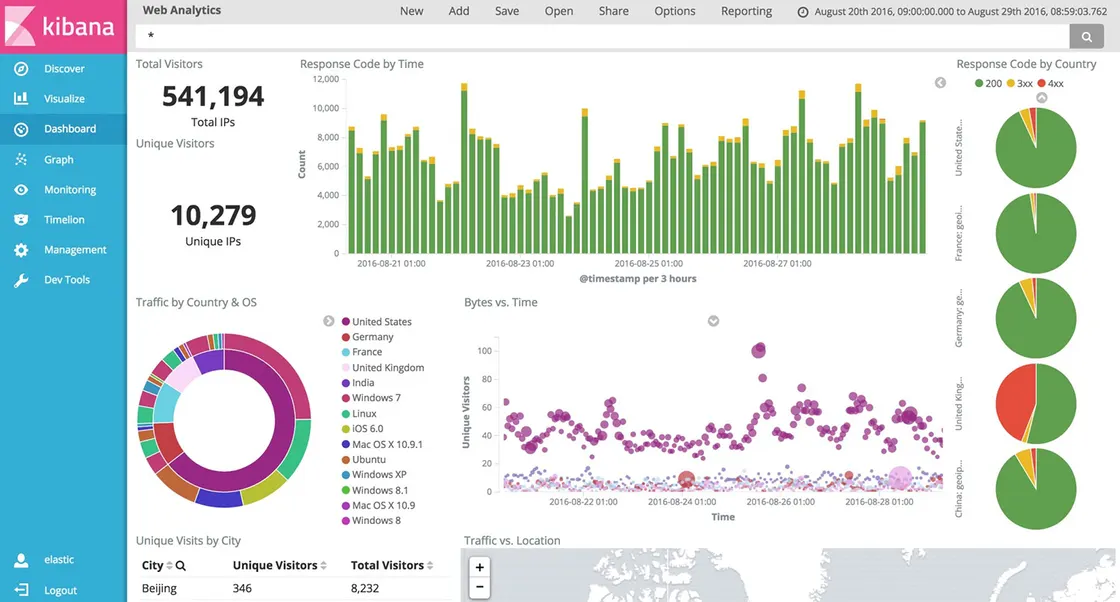
Example of an analytics dashboard in the cloud

…or in the cloud

UbiqAir can be optionally connected to the cloud to provide detailed metrics, access historical metrics and analytics regarding air quality and office occupancy — for your latest meeting for interested participants, or for the entire building for your office manager.

Why it matters

Make sure you spend time efficiently

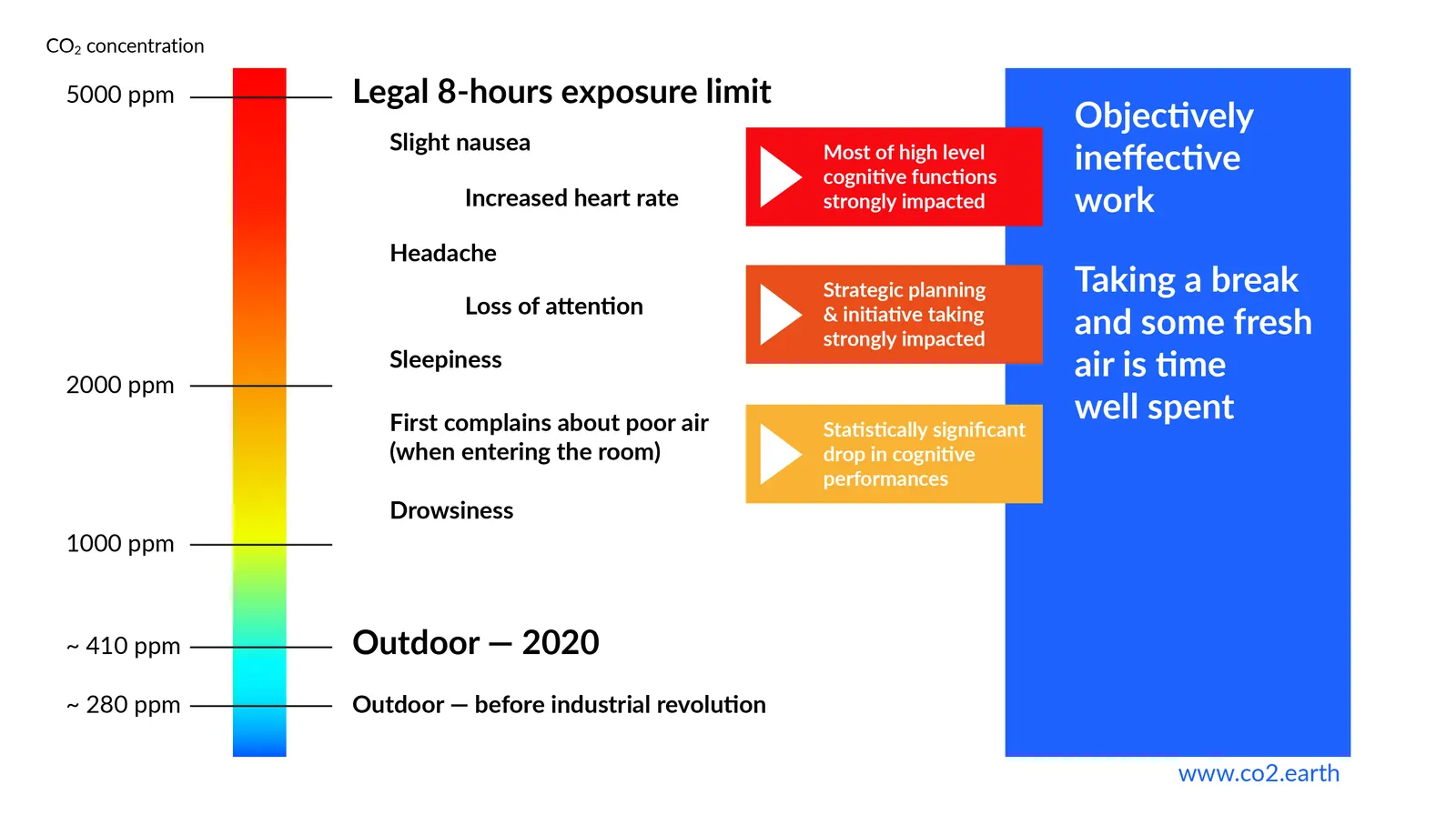
While toxic levels of CO₂ are almost never reached in office spaces, concentrations well below dangerous levels have been shown to negatively affect well-being and productivity.

Chart of indoor CO₂ concentration, from outdoor levels up to the legal 8-hour exposure limit, and its effects on health and cognitive performance. The same information is available as text below.
Read the chart as text
  • Outdoor air before the industrial revolution: about 280 ppm.
  • Outdoor air in 2020: about 410 ppm.
  • 1,000–2,000 ppm: drowsiness, and the first complaints about poor air (when entering the room).
  • 2,000–5,000 ppm: sleepiness, loss of attention, headache, increased heart rate and slight nausea.
  • 5,000 ppm: the legal 8-hour exposure limit.
  • As the concentration rises, cognitive performance suffers: first a statistically significant drop, then strategic planning and initiative-taking are strongly impacted, then most high-level cognitive functions.
  • Objectively ineffective work: taking a break and some fresh air is time well spent.
Source: co2.earth
Benefits

Fresh air pays off for everyone

For employees

  • Air quality feedback helps raise awareness about the problem
  • Act on a disturbance that is usually unnoticed
  • Less unproductive time at work leads to a better work-life balance

For employers

  • Raised productivity by cutting inefficiencies
  • Increased employee well-being
  • Combine aesthetics and functionality

For office managers

  • Centralised information about room occupancy and air quality
  • Objective metrics and analytic tools to determine optimal occupancy and “cool down time” for each room
  • Help to spot issues with ventilation early on

Interested in UbiqAir?

Get in touch Illustration: a lively, colourful meeting around a table